Wooden Mine Poles: Why Timber Is Still Chosen Underground
·
Steel and hydraulic supports are common, yet wooden mine poles keep their place underground. Here is why, and how to pick the right pole.
As a gallery is driven underground, rock and soil press towards every new opening. Holding this pressure and keeping the workplace safe is called ground support. Steel sets and hydraulic props are widely used, yet many mines still rely on wooden mine poles, especially for temporary support at the advancing face. This wooden mine poles guide covers why timber works underground, what to look for when choosing poles and what we need for an order.
What a mine pole does
A mine pole is a prop or cap that carries the roof and the side walls of a gallery. It is used in temporary support set up quickly as the face advances, in development and production headings, as a helper behind permanent support, and as wedges and blocks that tighten the roof. One log can give a prop, a cap and blocks, which makes timber very versatile on site.
Why timber works underground
It warns before it fails
When timber nears the limit of what it can carry, it cracks audibly and visibly crushes or bends. These signs give the crew time to add support or clear the area. A material that warns instead of breaking suddenly and silently is an important part of underground safety.
Easy to carry and set
Heavy equipment cannot always be used in narrow, low galleries. A pine mine pole is lighter than a steel member doing the same job; the crew can carry it by hand and set it quickly.
Cut to length on site
Roof height changes along a gallery. A wooden pole is cut to length with a saw and tightened with wedges, a fit that standard metal parts give far less easily.
Economical and reusable
Poles of temporary support can be recovered after the face has moved on, and sound ones reused, which lowers material cost.
Choosing the right pole
- Species: our mine poles are pine, with straight grain and a good balance of weight and strength for ground support.
- Length and diameter: gallery height, roof conditions and whether the pole is a prop or a cap decide the size. We prepare mine poles to the length and diameter the mine needs.
- Straightness: a strongly curved or heavily knotted pole carries load unevenly; straight stems are preferred.
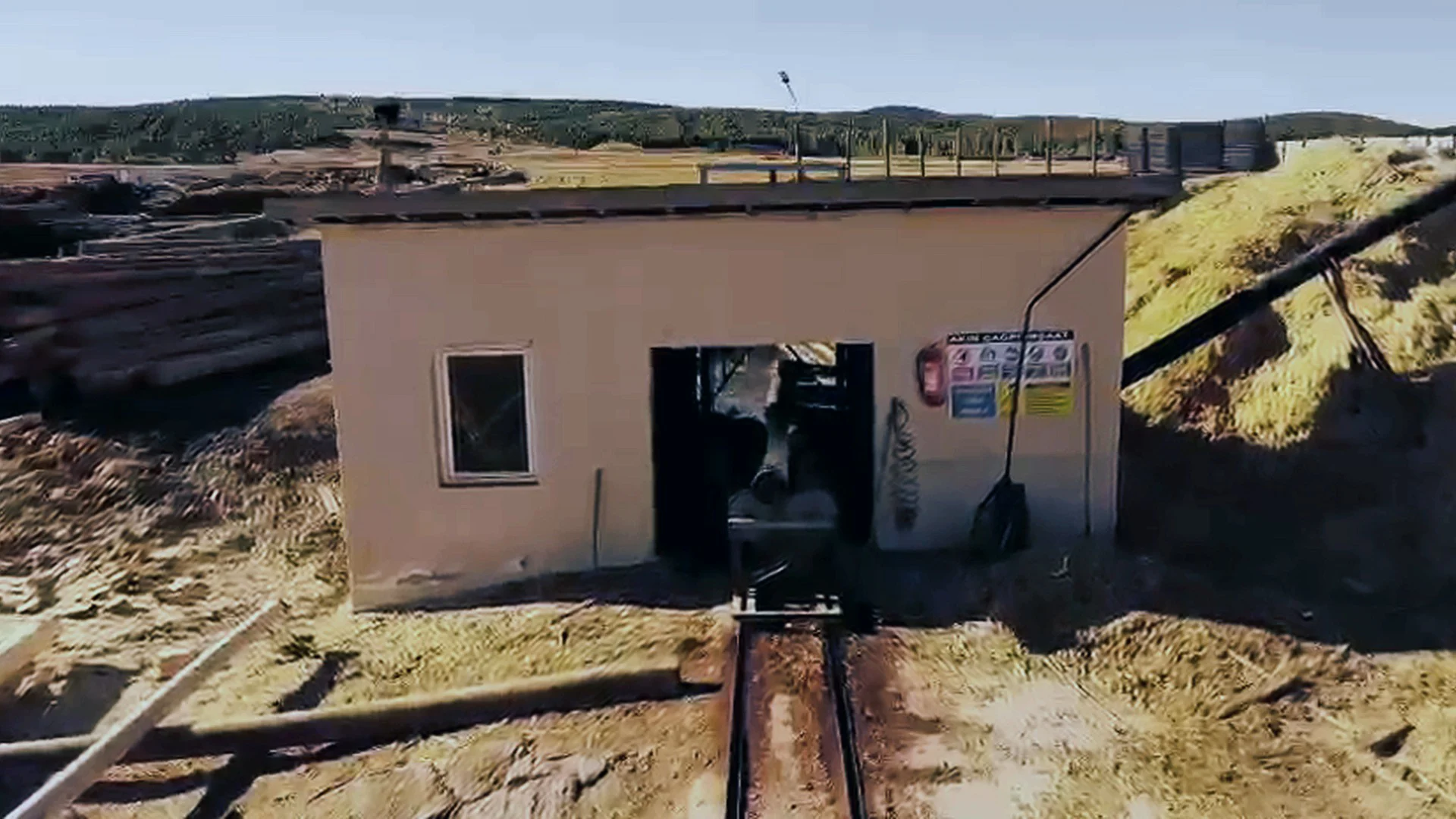
- Bark: a peeled pole dries faster, hosts no insects and its surface can be checked. Our poles are prepared in our peeling plant.
Moisture and impregnation
Underground air is damp and still, which favours fungal growth in wood. For supports that stay in place for a long time, protecting the wood clearly extends its life; for short-term temporary support, untreated poles are usually enough. Tell us which poles will stay how long, and we will decide together whether vacuum-pressure impregnation is worth it.
Storage tips
- Stack poles on bearers so they do not touch the ground.
- Leave room for air between layers; tightly stacked wet poles deteriorate quickly.
- Keep long-term stock out of the rain, but do not cover it airtight.
What we need for an order
Length, diameter (or a diameter range), quantity, delivery place and date are enough for a quote. Send them through the quote form or see the details on our mine pole page. Shipped by truck from our stock yard, our poles reach mines across Türkiye and abroad.